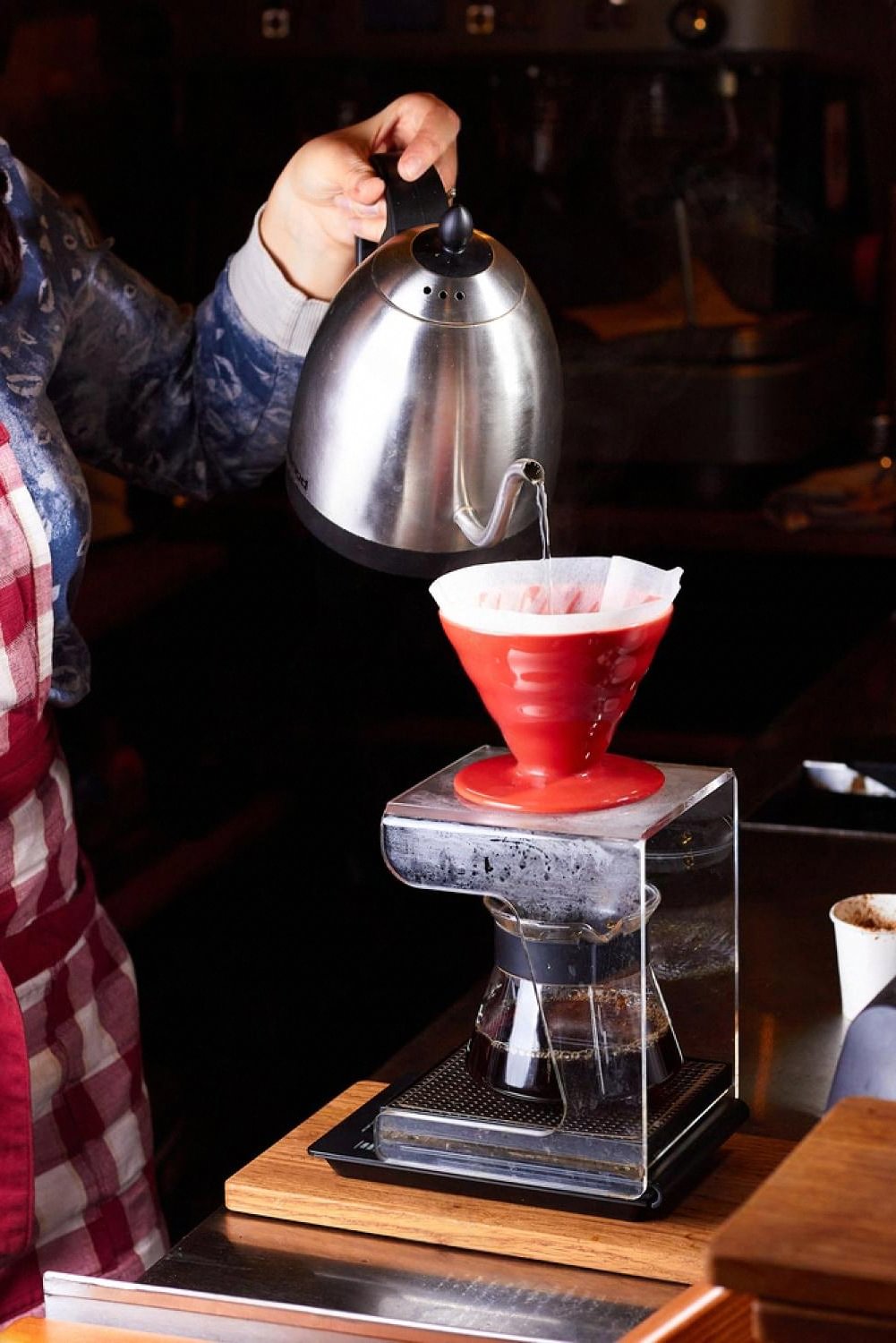
The first summer I tried to make pour-over coffee in a Dubai apartment, the result was bitter, flat, and a little sad. The beans were good, the kettle was right, the recipe was the one I had used for years in cooler weather. What changed was everything around the cup: 42 degrees outside, the AC roaring at 21 inside, a bag of beans that had been sitting in a warm car for an hour after I picked them up. Brewing well at home here is less about chasing a perfect ratio and more about respecting what the climate does to your coffee before the water even touches it.
Once I started treating heat and humidity as ingredients, the cup improved fast. The same beans that tasted like wet cardboard in July tasted like jasmine and stone fruit in October, with nothing changed but storage, water, and pour technique. If you are building a home setup in the UAE, the notes below are the ones I wish someone had handed me on day one.
The Dubai factor
Why your beans age faster here
Specialty coffee is alive. The CO2 inside a freshly roasted bean keeps escaping for weeks, and the oils on the surface react with oxygen, light, and heat. In a Dubai summer, those reactions speed up. A bag that would peak at three weeks in a European kitchen can taste tired in ten days here if it sits on a sunny counter. Roast date matters more than roast level, and where you store the bag matters almost as much as what is in it.
The simple rule: buy small, buy often, and keep the bag away from the window. A 250g bag finished in two weeks will almost always beat a 1kg bag stretched over two months, even if the 1kg felt like the smarter purchase at the till. If you are buying black coffee in Dubai from a local roaster, ask for the roast date on the bag and aim to brew between day 7 and day 21 after that date.
Humidity is the other quiet enemy. When you open a bag in an air-conditioned room and the beans hit warmer air on the counter, condensation forms on the surface. That moisture dulls aroma and clogs the grinder over time. Keep the bag closed except when you are actually scooping, and store it in a sealed, opaque container if you can. The fridge is not your friend here, the door cycles temperature and moisture in ways that punish coffee.
Brew methods
Picking the right tool for the cup you want
There is no single best method, only methods that suit your mornings. In a Dubai kitchen, the four that work hardest for the space and the heat are V60, AeroPress, French press, and moka pot. Each one asks different things from your grind and your patience.
- V60 pour-over for clean, aromatic cups. It rewards light to medium roasts and shows off floral or fruity notes. This is where Cantata’s flavoured single-origin beans shine, the dripper lifts those top notes instead of muting them.
- AeroPress for fast, forgiving brews. Easy to clean, easy to travel with, and tolerant of slightly stale beans. Good if you have a short window before work.
- French press for body and weight. Better with medium to dark roasts. The thicker mouthfeel suits adding cardamom or dates on the side.
- Moka pot if you grew up on espresso bars and want something close at home without buying a machine. Strong, syrupy, and unforgiving of bad grind.
V60 in detail
The pour-over that suits this city best
If I had to keep only one brewer in a Dubai apartment, it would be the V60. It is small, easy to rinse, and the cone shape gives you real control over extraction. It is also the method that pairs best with the more interesting beans appearing on local shelves. Cantata, for example, has been producing flavoured specialty coffee in Belgium for around 25 years, and their aromatic single-origin V60 beans (think bergamot, vanilla, hazelnut profiles infused into green coffee before roasting) open up beautifully on a slow pour. These are not syrups added to the cup, the flavour rides inside the bean and releases with the bloom.
A reliable home V60 recipe for one mug: 15 grams of coffee, 250 grams of water, total brew time around 2 minutes 30 seconds to 3 minutes. Grind medium-fine, somewhere between table salt and caster sugar. Rinse the paper filter with hot water first, both to remove the paper taste and to warm the server underneath, which matters more than people think when your AC is blasting cold air over the brewer.
Water temperature should sit between 92 and 96 Celsius. Most Dubai tap water is too hard and too chlorinated for good coffee, so use filtered water, or buy bottled water with a moderate mineral content. The Specialty Coffee Association water guidelines are a good starting point if you want to get technical, but you do not need a chemistry kit, any decent jug filter is a huge upgrade over straight tap.
Pour in stages. Start with 45 grams of water for the bloom, wait 30 to 40 seconds for the CO2 to escape (you will see the bed puff up), then pour in slow concentric circles up to 150 grams. Pause briefly, then finish to 250 grams. Aim for the water to fully drain by the three minute mark. If your brew finishes in under two minutes, grind finer. If it stalls past four, grind coarser.
A short checklist for better cups at home
1. Buy fresh, buy small
Pick bags roasted in the last two weeks. Finish a 250g bag in 14 to 18 days. Avoid bulk buys you cannot drink quickly in Dubai heat.
2. Grind right before brewing
A burr grinder pays for itself within a year. Ground coffee loses 60 percent of its aroma within 15 minutes once it hits air.
3. Use filtered water
Hard tap water mutes acidity and leaves a chalky finish. A simple jug filter or bottled mineral water fixes most off-flavours.
4. Warm everything
Rinse the filter, preheat the cup and server. A cold ceramic mug in an air-conditioned kitchen drops brew temperature by several degrees.
Common problems, quick fixes
If the cup tastes bitter and dry, you have over-extracted. Coarsen the grind, lower the water temperature by two degrees, or shorten the brew. If it tastes sour and thin, you have under-extracted. Go finer, hotter, or pour a little slower. The flavour wheel is wide, but those two levers will fix 80 percent of bad cups.
One Dubai-specific note: if the first cup of the day always tastes flat compared to the second, the bag is probably sitting somewhere too warm. Move it to the coolest, darkest cupboard you have, away from the oven and the window. Aromatic and flavoured beans, like the Cantata V60 line, are especially sensitive, the volatile compounds that carry the bergamot or vanilla profile are the first to fade in heat.
Frequently asked questions
What is the best coffee brewing method for a small Dubai apartment?
For most home setups in Dubai, the V60 pour-over is the strongest all-rounder. It is compact, easy to clean, and works on a single mug at a time so beans stay fresh. If you want something even simpler, the AeroPress is fast and forgiving. Both pair well with single-origin or aromatic specialty beans available from local roasters.
Should I store coffee beans in the fridge in Dubai?
No. The fridge cycles temperature every time the door opens and pulls moisture into the bag, which dulls aroma and can introduce off-flavours from nearby food. Store beans in a sealed, opaque container at room temperature, in the coolest and darkest cupboard you have. The freezer is acceptable for long-term storage if the beans are vacuum-sealed in small portions, but for daily use, a closed kitchen cupboard is better.
What water should I use for brewing coffee in the UAE?
Skip straight tap water. It tends to be hard and treated with chlorine, both of which mute the cup. A simple jug filter, a built-in tap filter, or bottled water with a moderate mineral content (around 75 to 150 mg/L total dissolved solids) gives a noticeably cleaner result. The difference is most obvious on light-roasted single origins where acidity matters.
How long do specialty coffee beans stay fresh in Dubai’s climate?
Most specialty beans peak between 7 and 21 days after the roast date. In Dubai’s heat, the upper end of that window shrinks, especially if the bag has been transported in a hot car or left on a sunny counter. Aim to finish a 250g bag within two to three weeks of opening, and check the roast date rather than the best-before date when buying.
What grind size should I use for a V60?
Medium-fine, roughly between table salt and caster sugar. If your brew finishes in under two minutes, the grind is too coarse, go finer. If it stalls past four minutes and the bed looks like wet mud, go coarser. A burr grinder is worth the investment because blade grinders produce uneven particles that brew unevenly.
Are flavoured V60 beans the same as adding syrup to coffee?
No, they are quite different. Quality flavoured specialty beans, like the V60 range Cantata has been producing in Belgium for around 25 years, are infused at the green-coffee stage before roasting. The aroma compounds bond with the bean itself, so when you brew, the flavour comes through the coffee rather than sitting on top of it like a syrup. The result is more subtle, with the original bean character still recognisable.
Why does my home coffee taste worse than the same beans at the cafe?
Usually one of four things: stale or pre-ground beans, hard unfiltered water, inconsistent water temperature, or a cold brewing vessel. Cafes control all of these by default. At home, grinding fresh, filtering your water, using a thermometer or variable-temperature kettle, and pre-warming your cup and server closes most of that gap.

Baseball fan, traveler, hiphop head, reclaimed wood collector and collaborator. Operating at the crossroads of beauty and mathematics to craft experiences that go beyond design. Check me out on Dribbble or Medium.
No Responses